

Non-Latin Calligraphy
orthography
or·thog·ra·phy ȯr-ˈthä-grə-fē 1a: the art of writing words with the proper letters according to standard usage b: the representation of the sounds of a language by written or printed symbols 2: a part of language study that deals with letters and spelling
(Merriam-Webster)
~
orthography or·thog·ra·phy ȯr-ˈthä-grə-fē 1a: the art of writing words with the proper letters according to standard usage b: the representation of the sounds of a language by written or printed symbols 2: a part of language study that deals with letters and spelling (Merriam-Webster) ~
The world is full of rich calligraphic traditions; the Latin alphabet is only one of them. Here are some of my favorite scripts that I’ve used in the past.
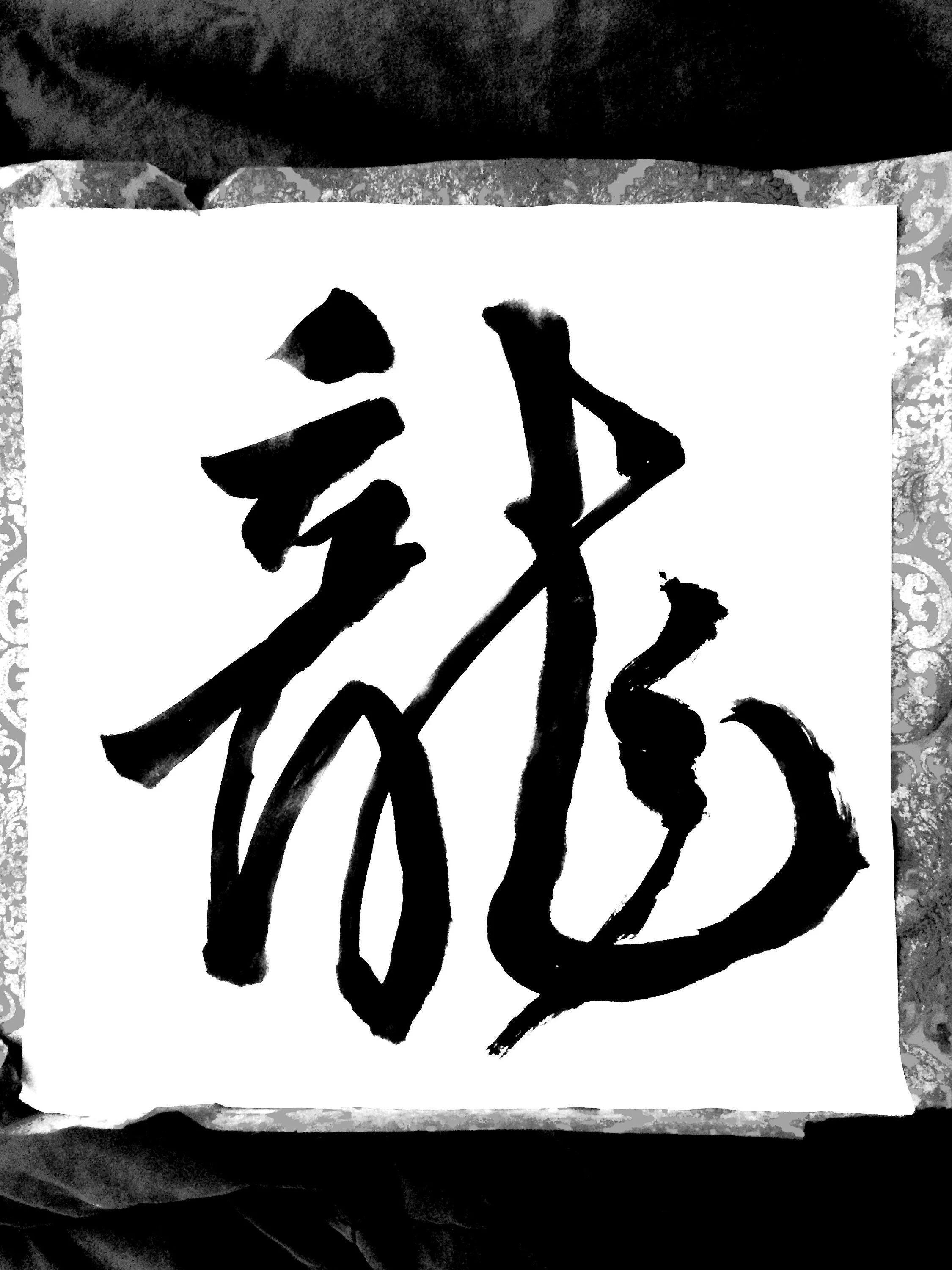
Chinese and Kanji
Brush-based ideographs and syllabaries
East Asian
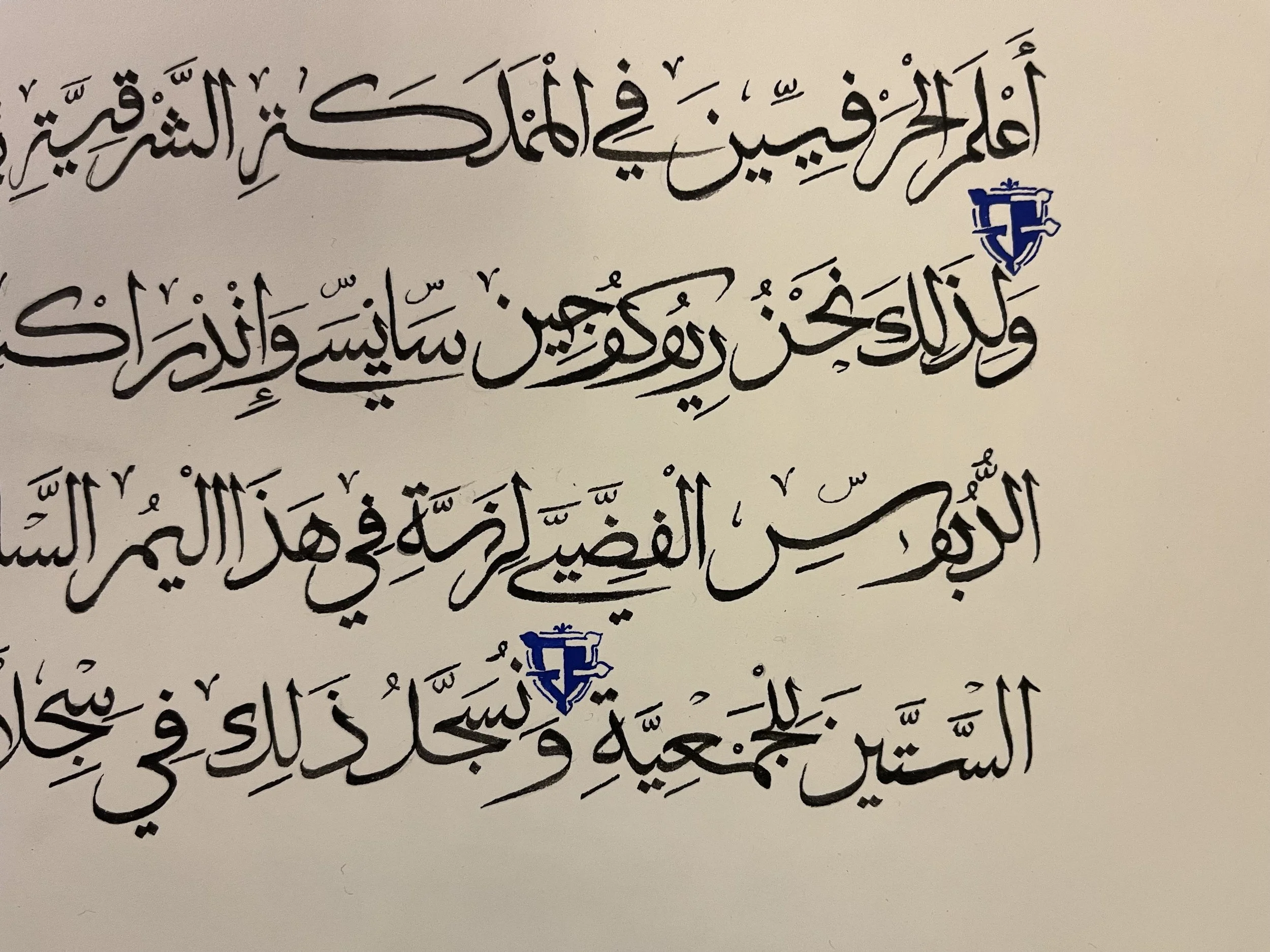
Thuluth, Nasta’liq; Uyghur
Running abjads written with a reed or bamboo pen
Arabic

Sephardi, Ashkenazi; modern
Non-running abjad in styles from ancient to modern
Hebrew
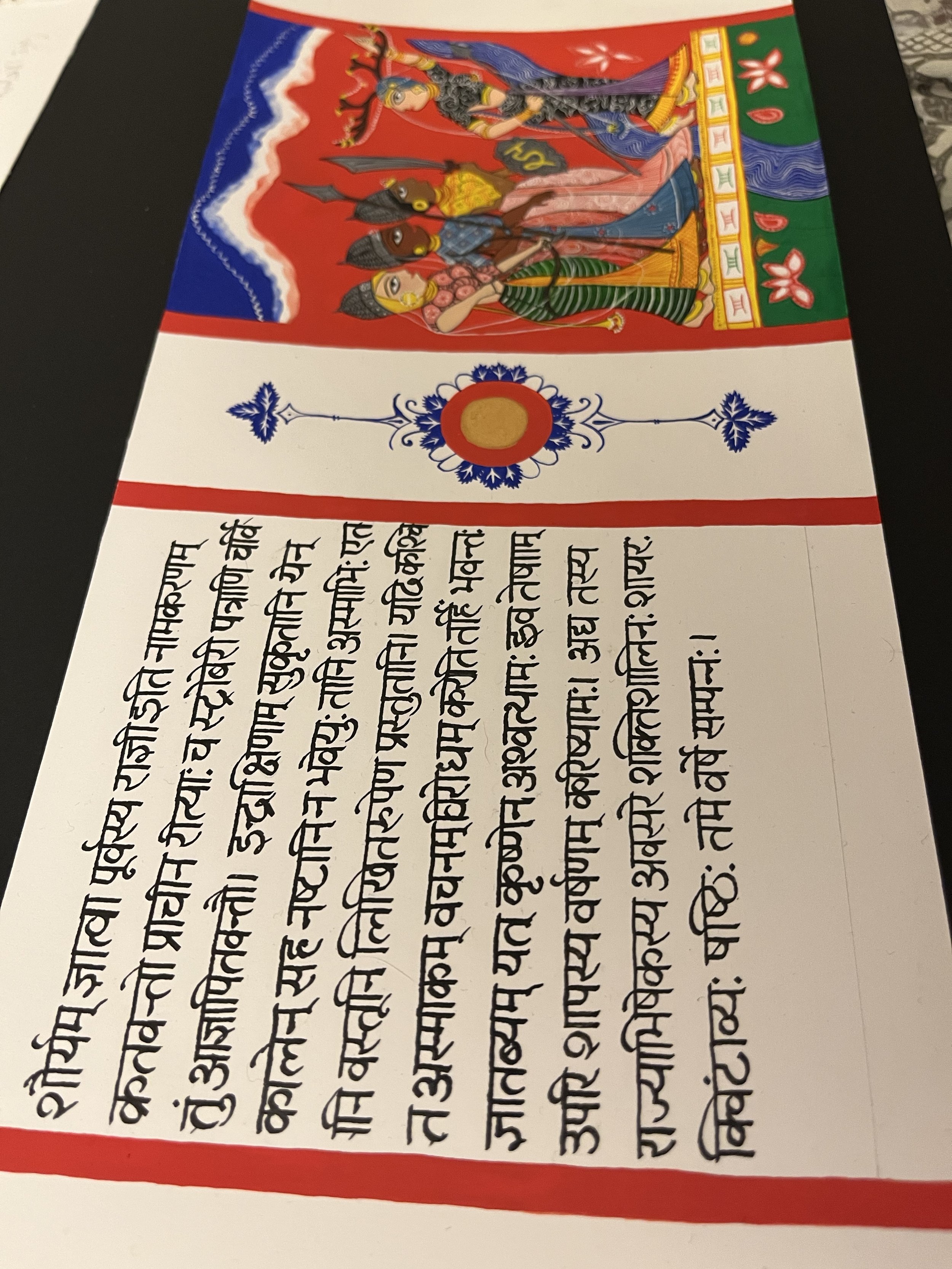
Misc.
All orthographies welcome!
Other
Chinese and Kanji
Brush-based ideographs and syllabaries
East Asian
Chinese is written in logograms, where each character represents a word on its own. Japanese uses a mixture of systems, including logograms (kanji), and two types of syllabary (hiragana and katakana) where each character represents a syllable.
Traditionally written with a brush, these scripts can be intricate and ornate or minimalist and flowing.
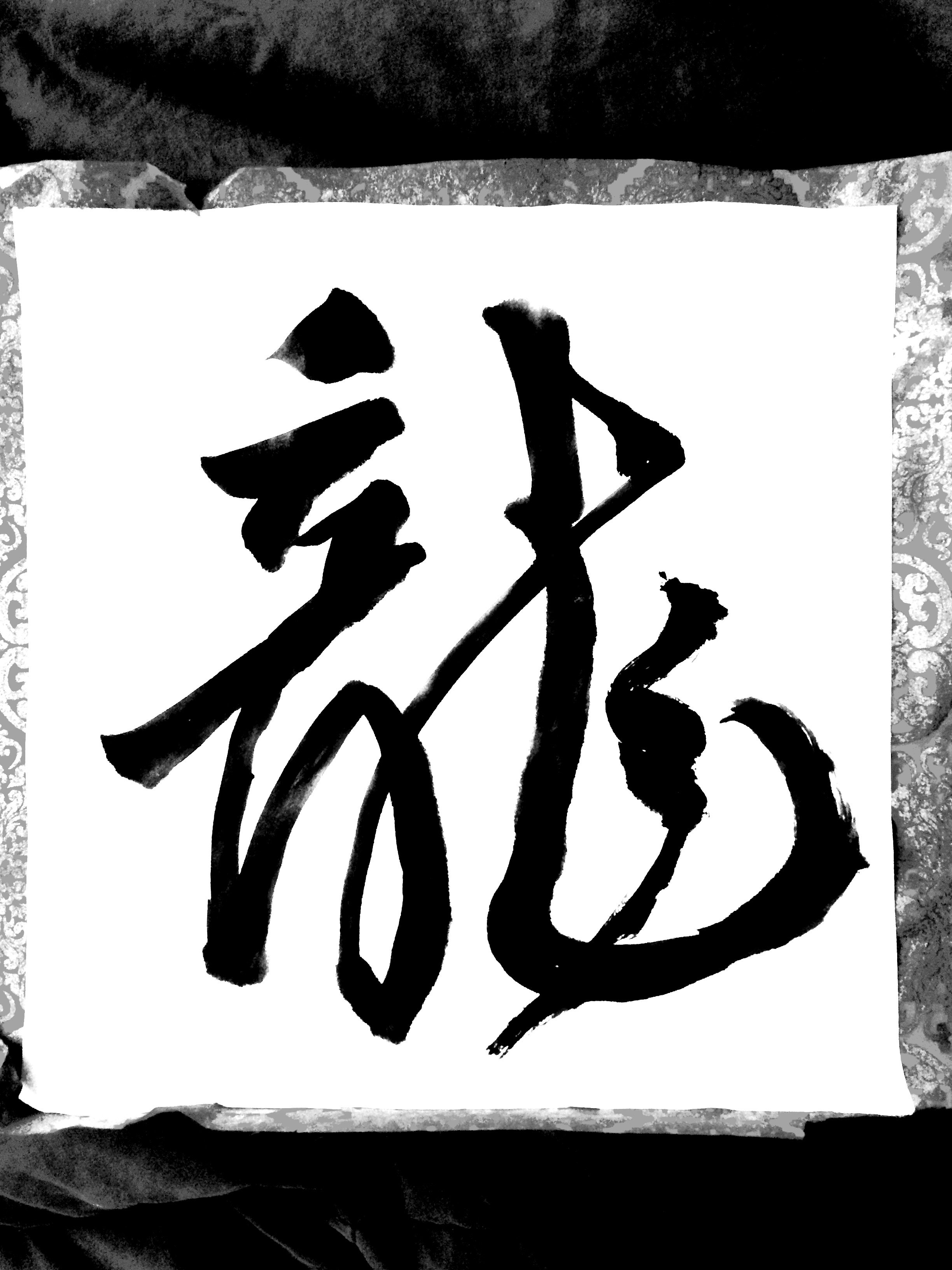
Chinese character 龍 (lóng) for "dragon"
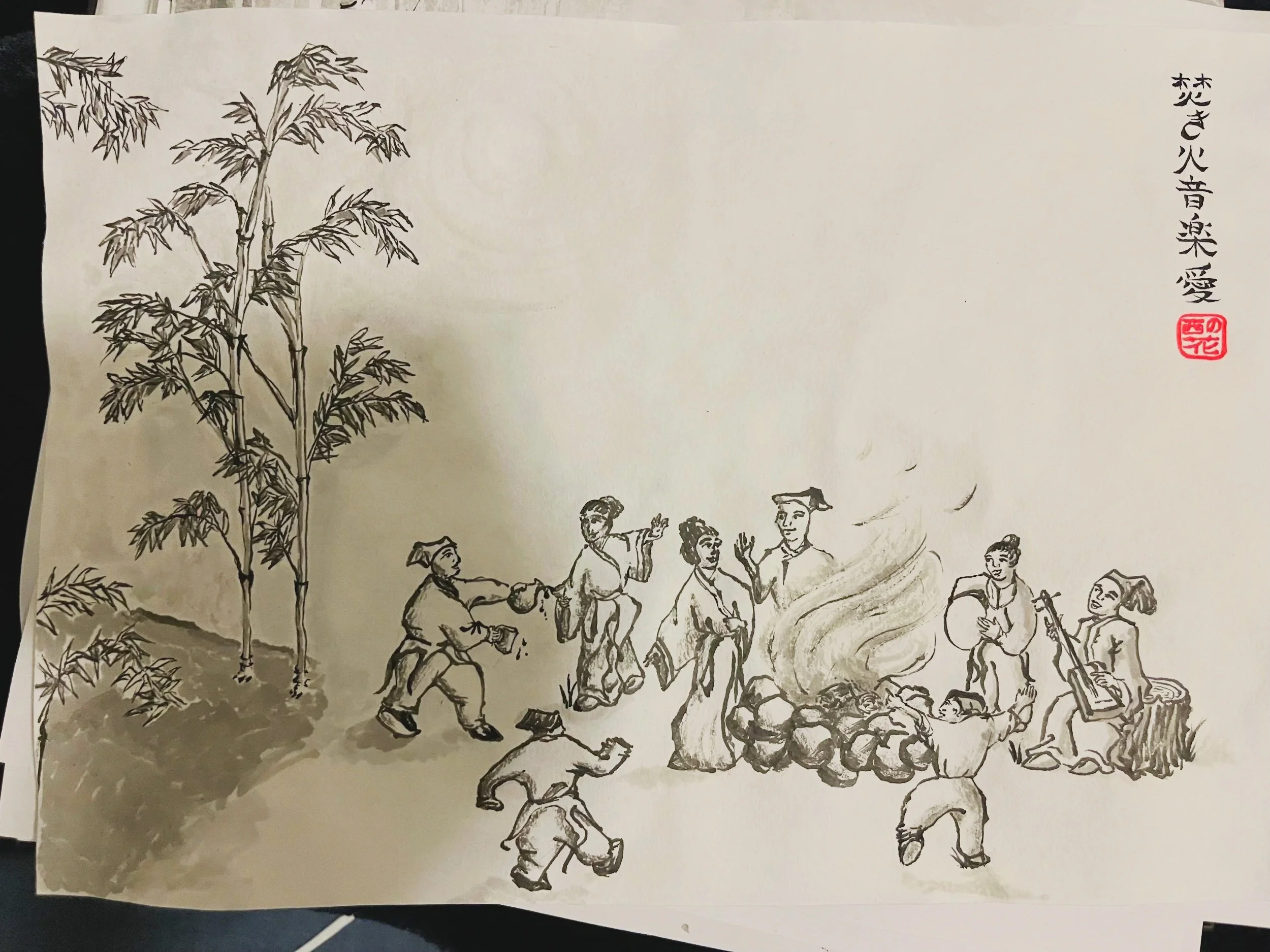
Kanji reads "bonfire, music, love". Sumi ink and brush
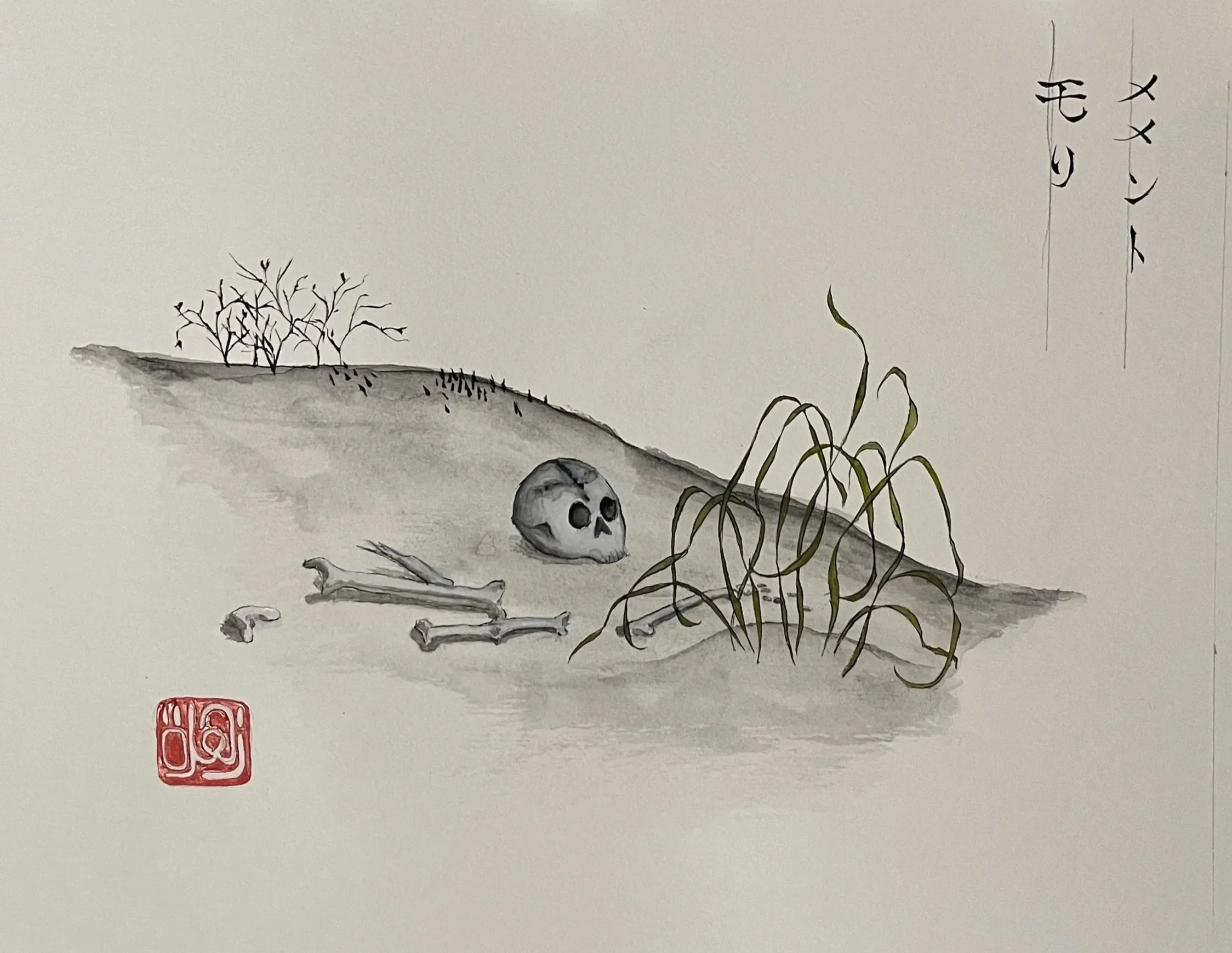
Katakana reads "memento mori", a Latin phrase meaning "reminder of death"—i.e. to live life to the fullest. Sumi ink brush pen
Thuluth, Nasta’liq; Uyghur
Running abjads written with a reed or bamboo pen
Arabic
Arabic is an abjad (alphabet with no or minimal vowels) most recognizably written in the classical “thuluth” style invented by Ibn Muqla in the ninth century. From there, it branched off into several variants, such as naskh, nastaliq, and muhaqqaq, each with its own distinctive look.
In modern times, artists continue to invent and push the Arabic scripts to new creative heights. One notable modern application has been the tradition of writing in shapes representing animals, aka zoomorphism.
Written in Thuluth (Arabic) script. Thuluth is the most "classical" form of written Arabic and was first developed in the ninth century. Bamboo pen
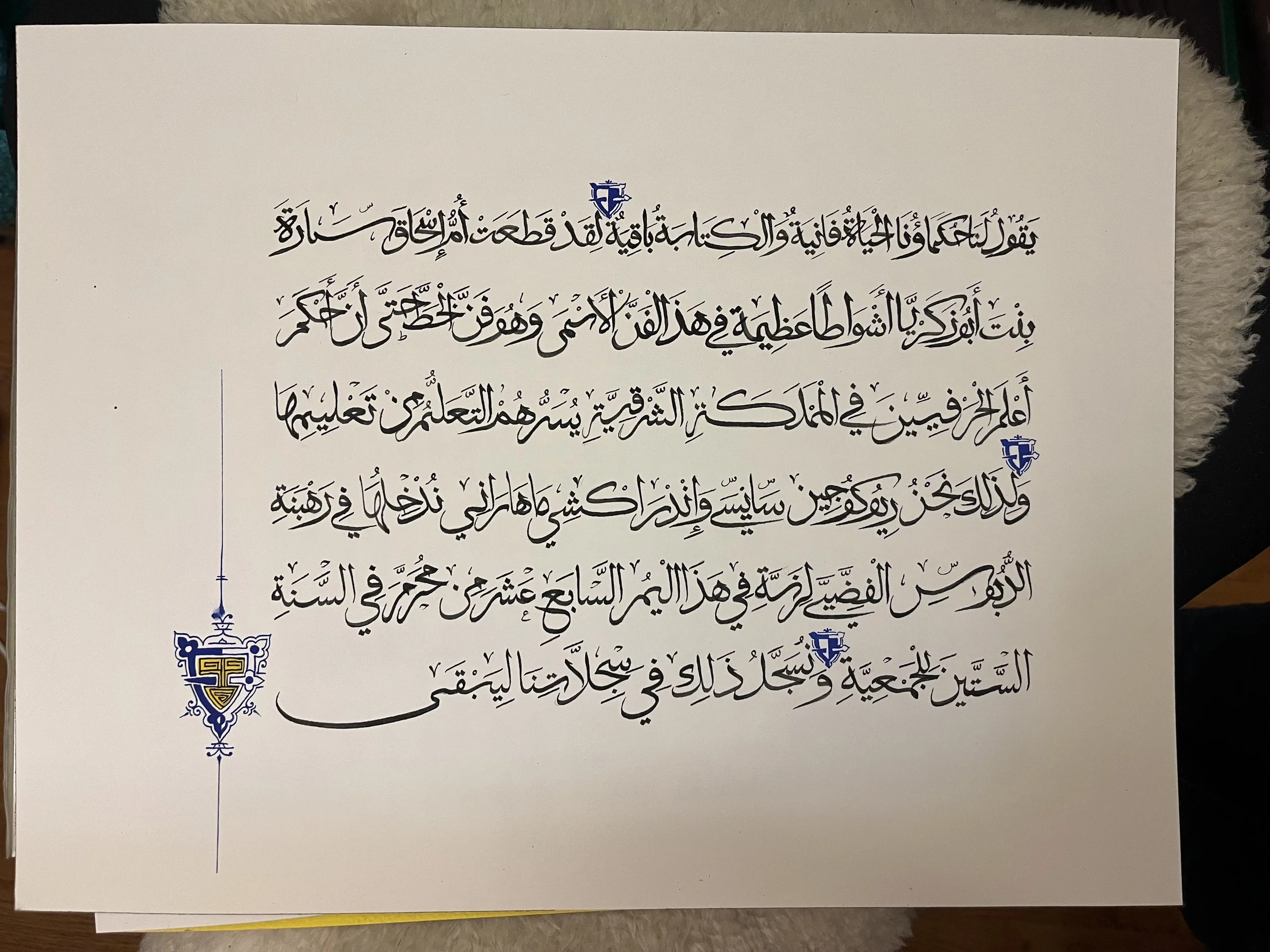
Written in Thuluth (Arabic) script. Thuluth is the most "classical" form of written Arabic and was first developed in the ninth century. Bamboo pen
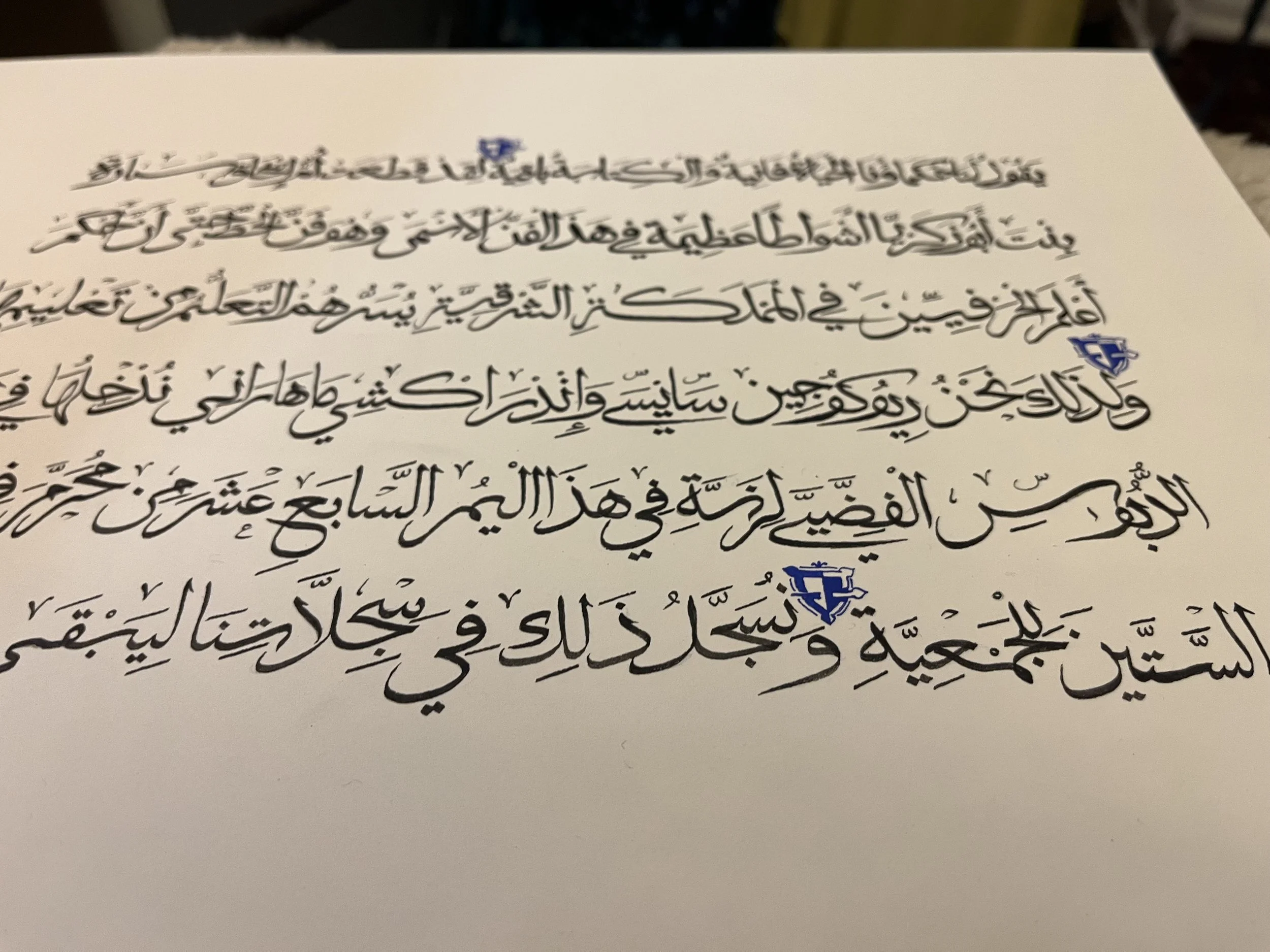
Written in Thuluth (Arabic) script. Thuluth is the most "classical" form of written Arabic and was first developed in the ninth century. Bamboo pen
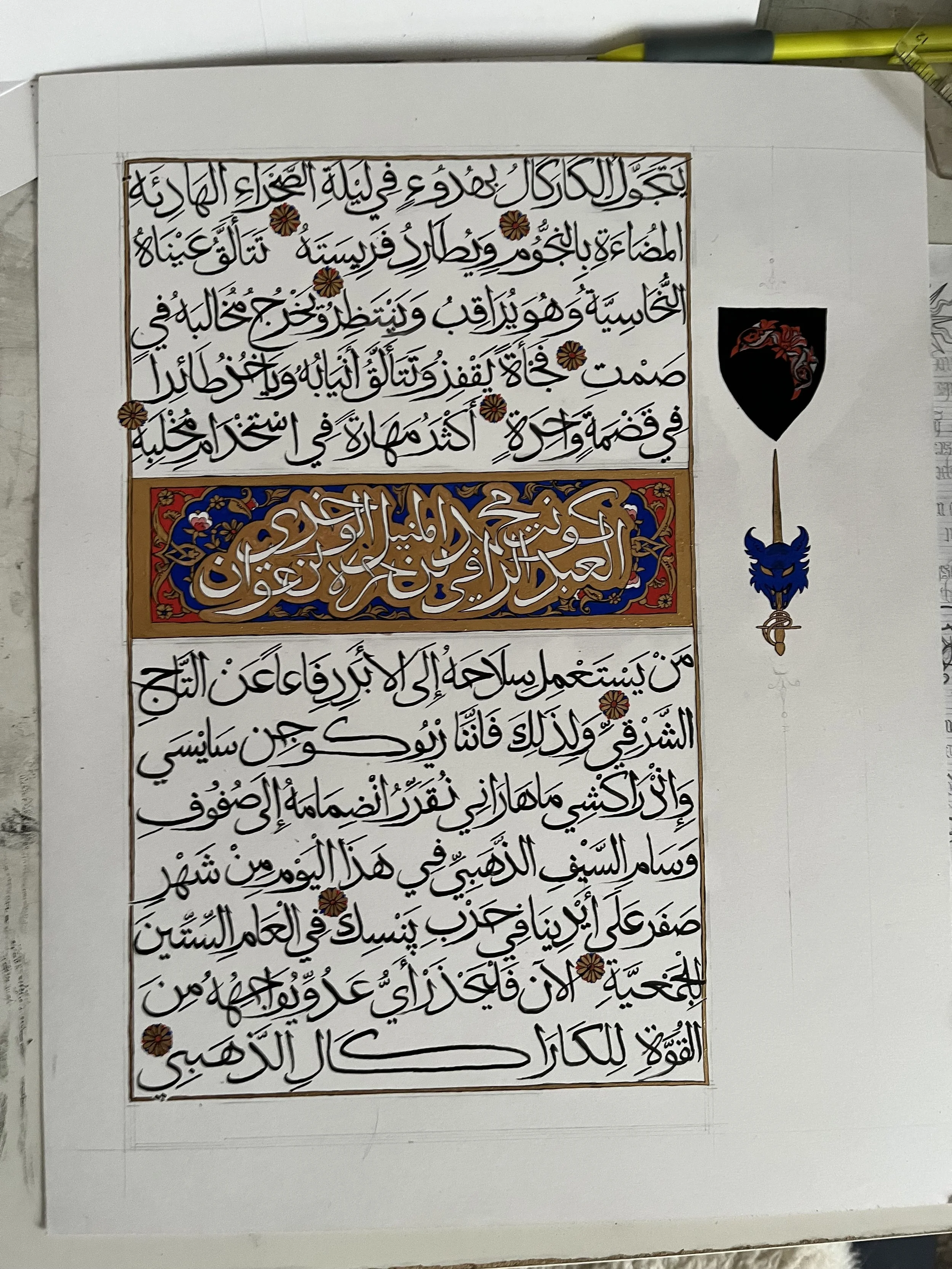
Written in Muhaqqaq script, a form of Thuluth (Arabic). Bamboo pen
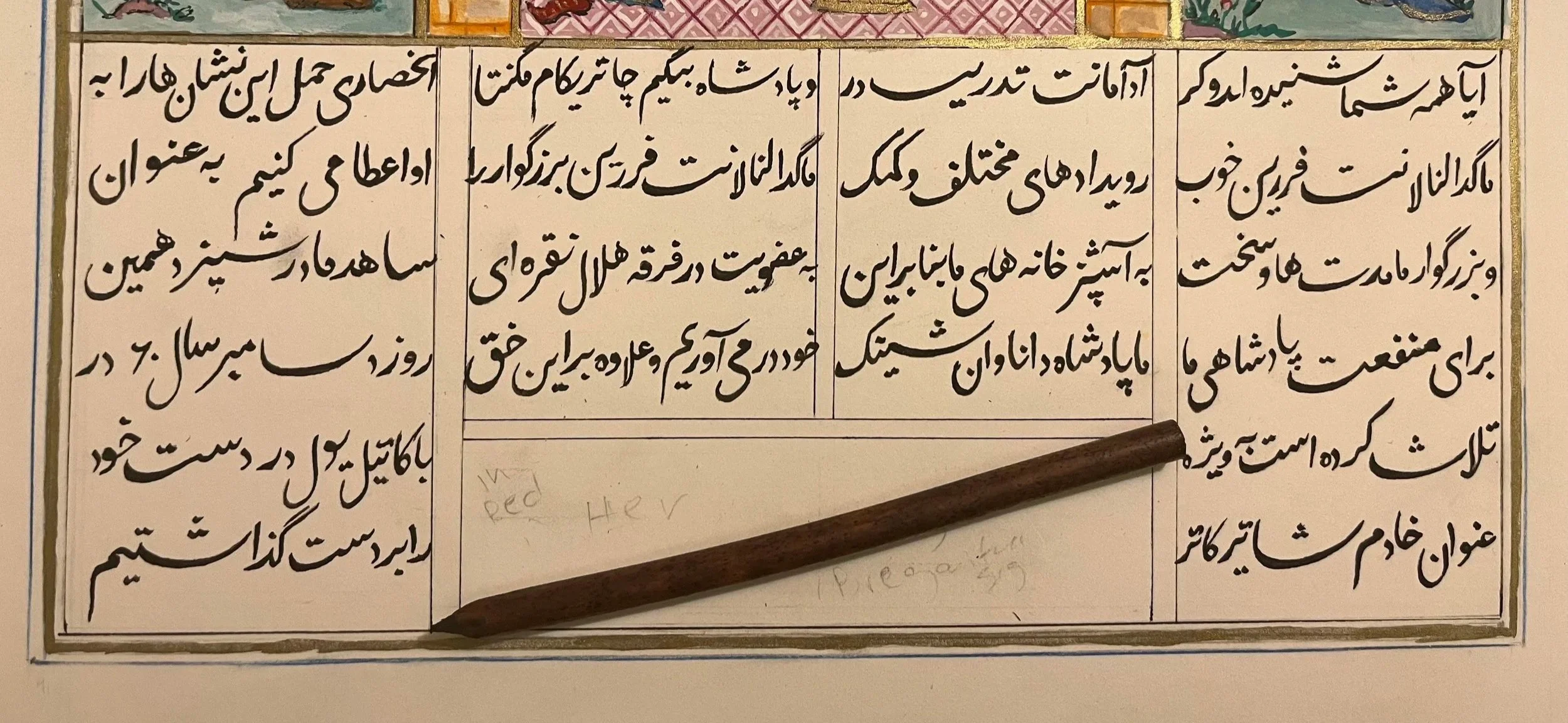
Written in nastaliq, a style of Arabic script developed to write in Persian (Farsi). Reed (?) pen. Painting by another artist.
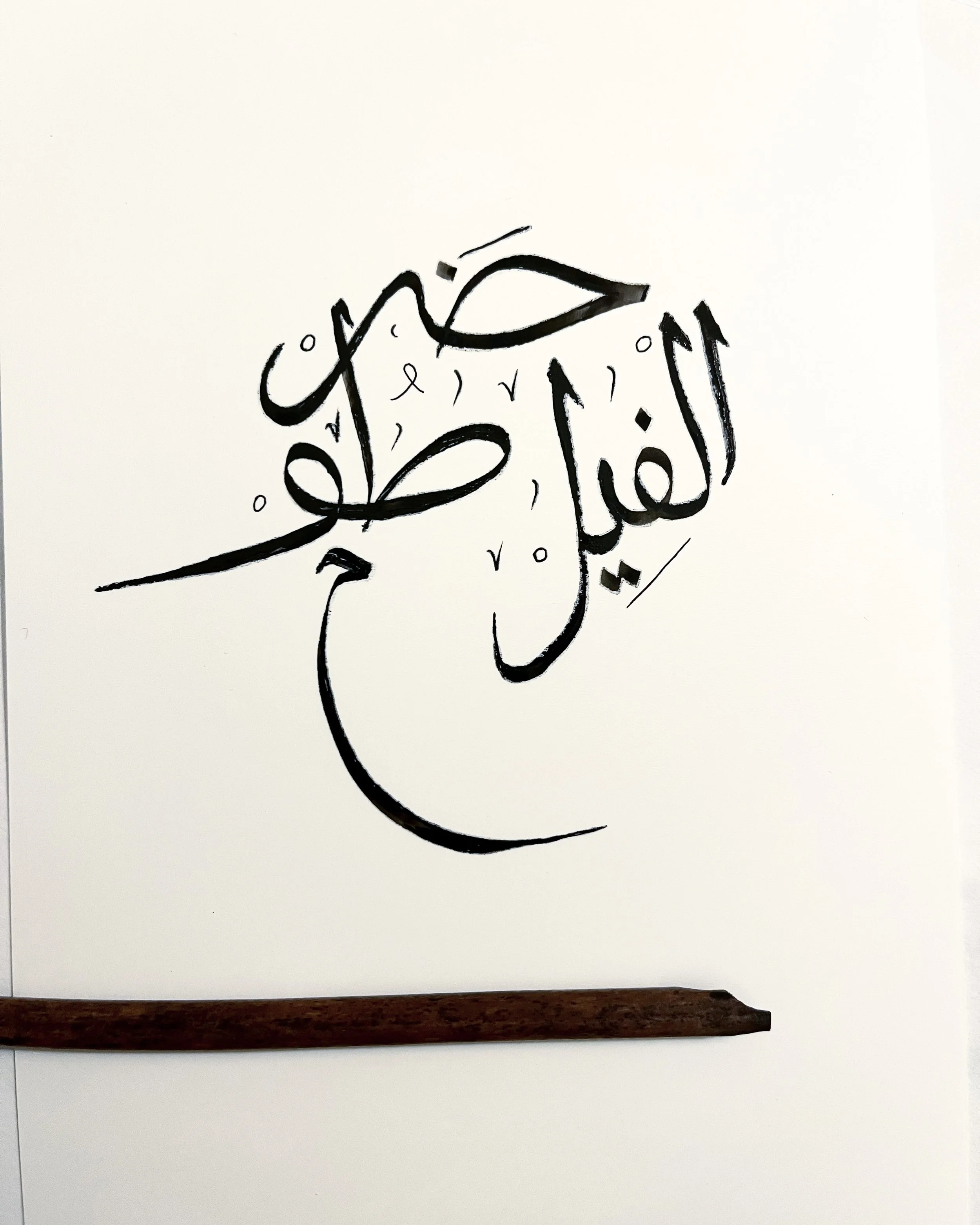
Elephant's head in profile. Zoomorphic calligraphy reads "elephant's trunk". Reed (?) pen
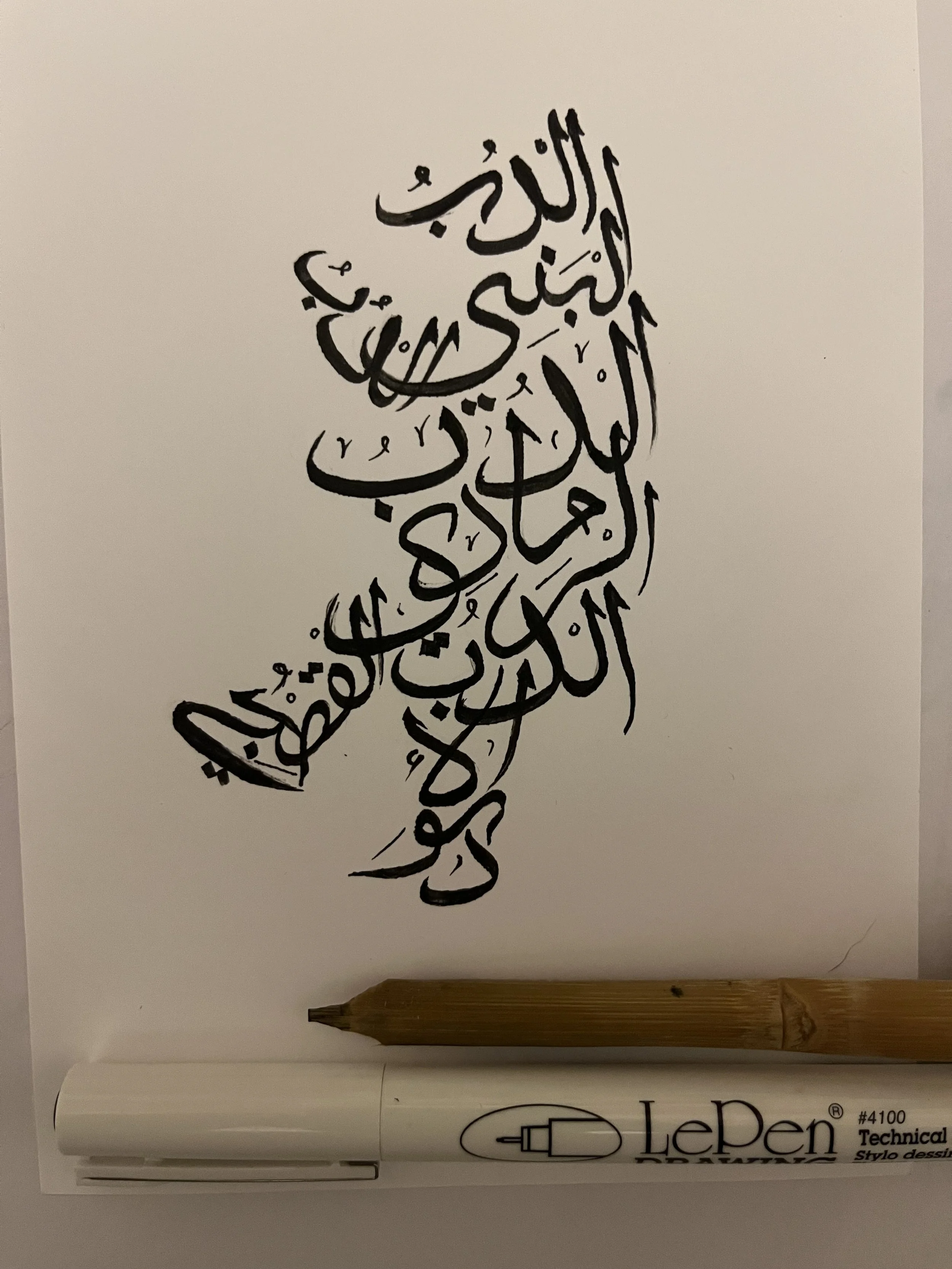
Zoomorphic calligraphy of dancing bear. Text reads different types of bears (black, grizzly, polar, etc.) Bamboo pen
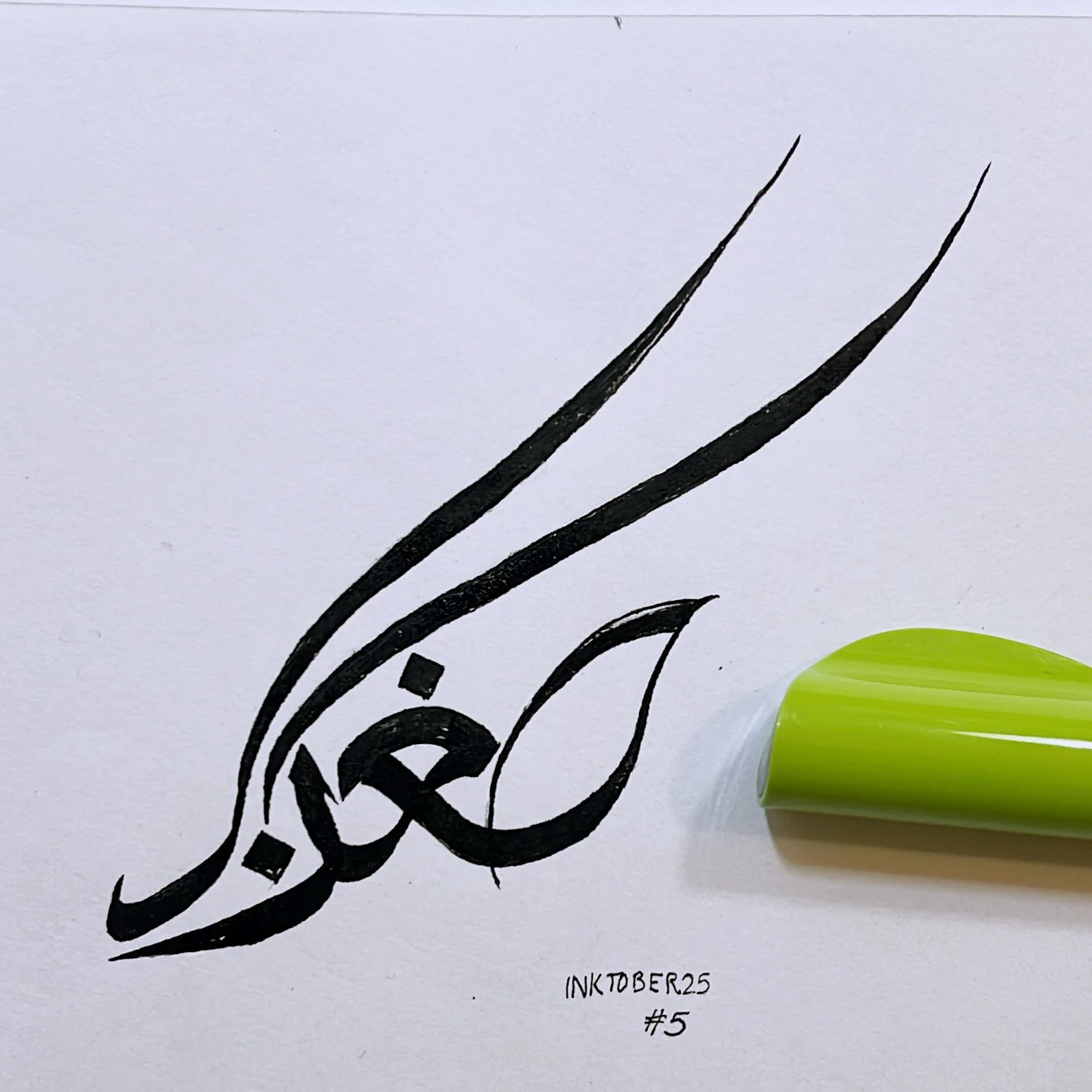
Zoomorphic calligraphy of a gazelle's head in profile. Text reads "gazelle". Pilot parallel pen
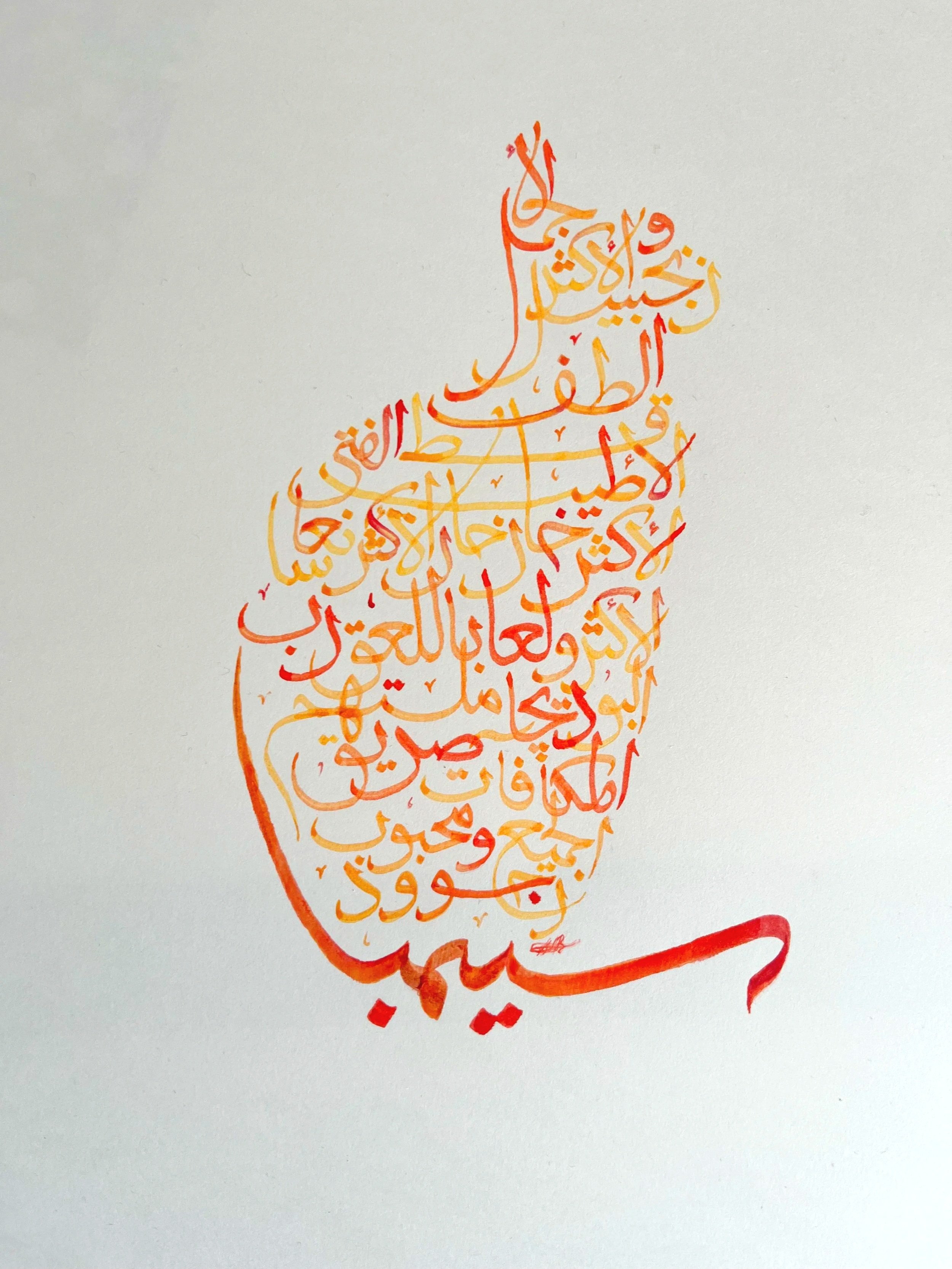
Zoomorphic calligraphy of Simba (the cat)
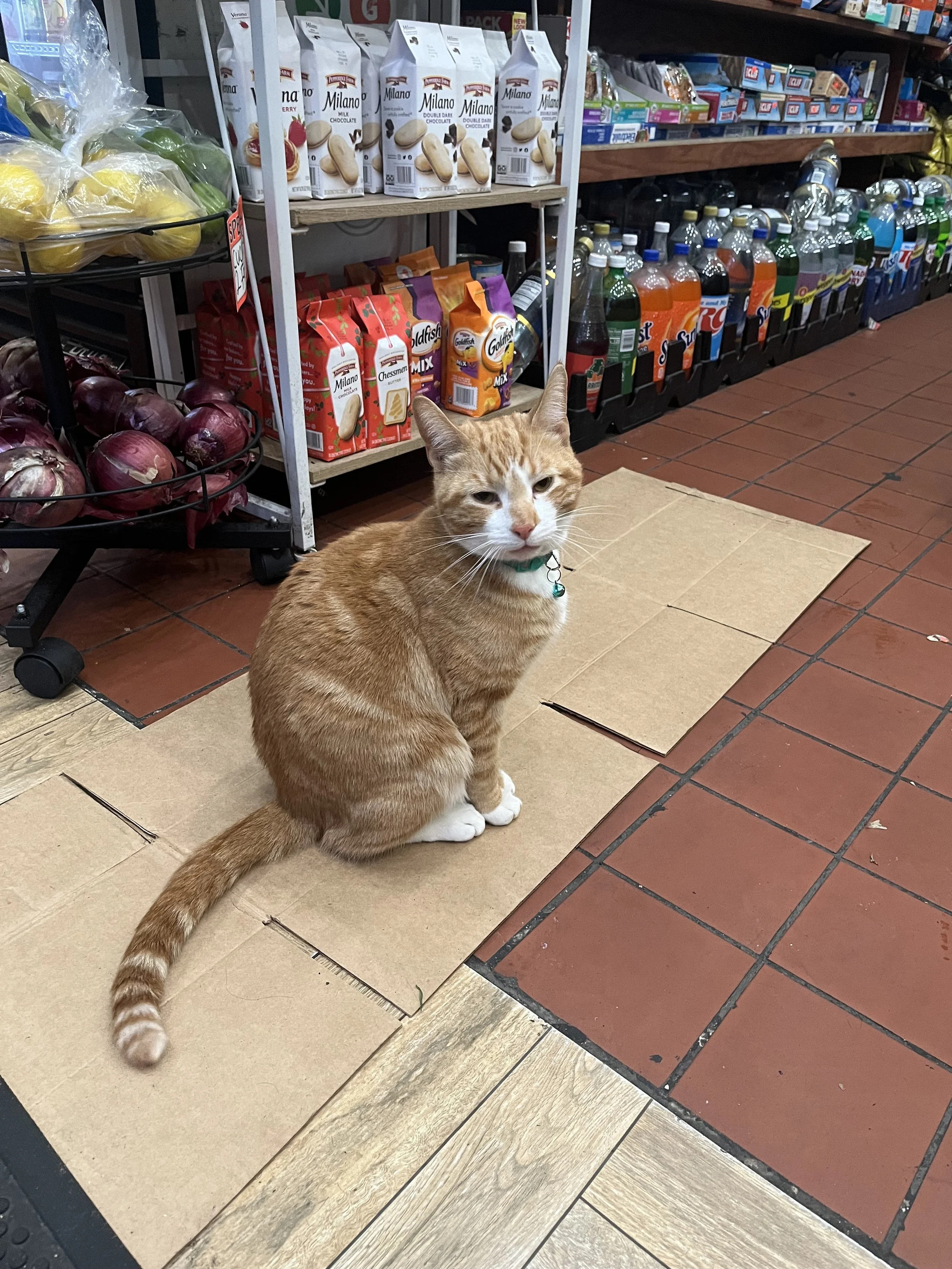
Simba (the cat)
Sephardi, Ashkenazi; modern
Non-running abjad in styles from ancient to modern
Hebrew
The Hebrew “aleph-bet” is an abjad for a language cryogenically frozen in time. In ancient times it was supplanted in use by Aramaic (which eventually became Arabic), and relegated to the status of a “sacred” (or dead) language. In modern times, it was resurrected as part of the Zionist movement. As a result, calligraphic traditions in this language tend to be either very old or very modern.
Check out my Judaica page for some more examples and info on micrography/micro-calligraphy.
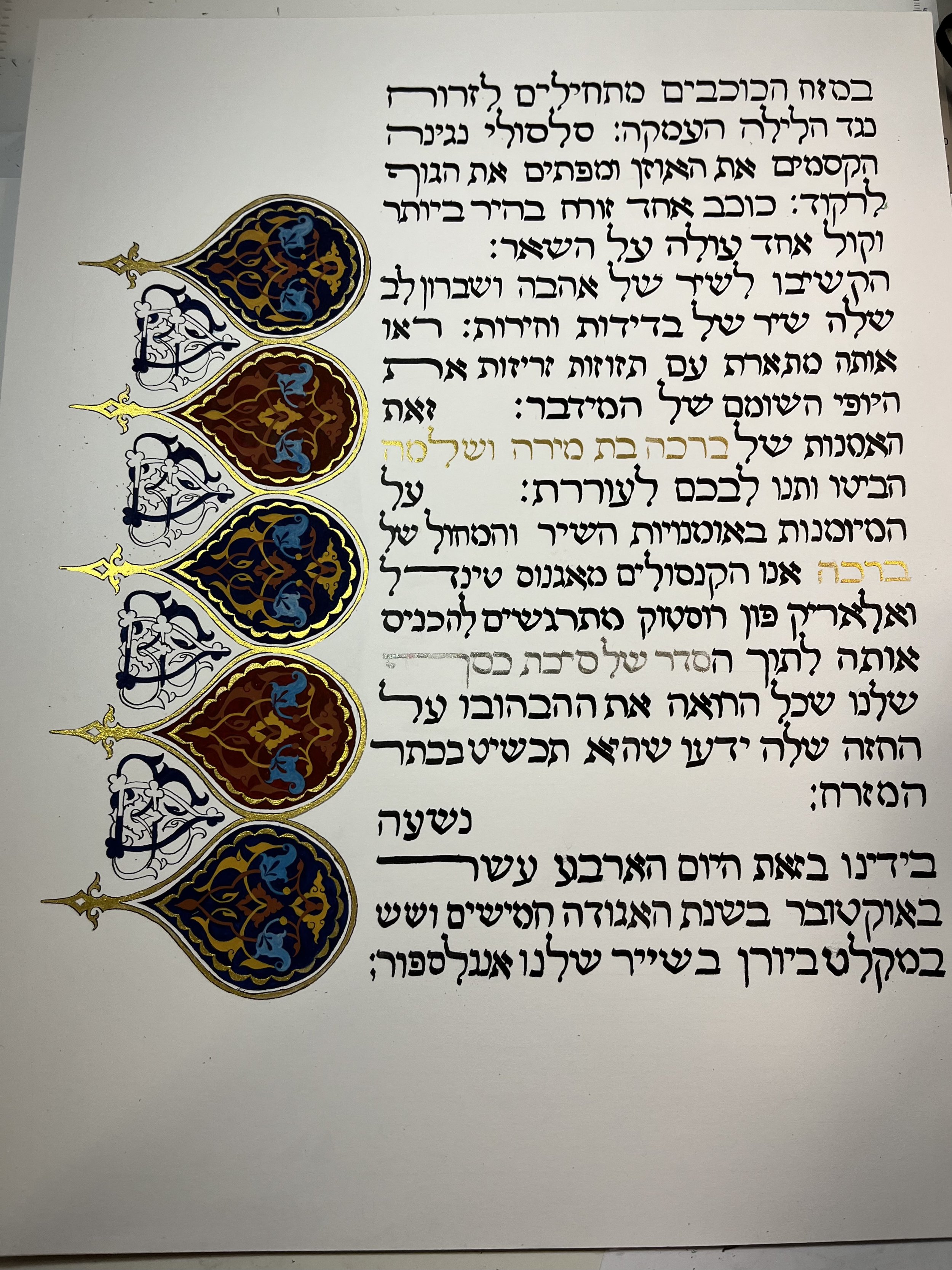
Written in Sephardi script. Dip pen
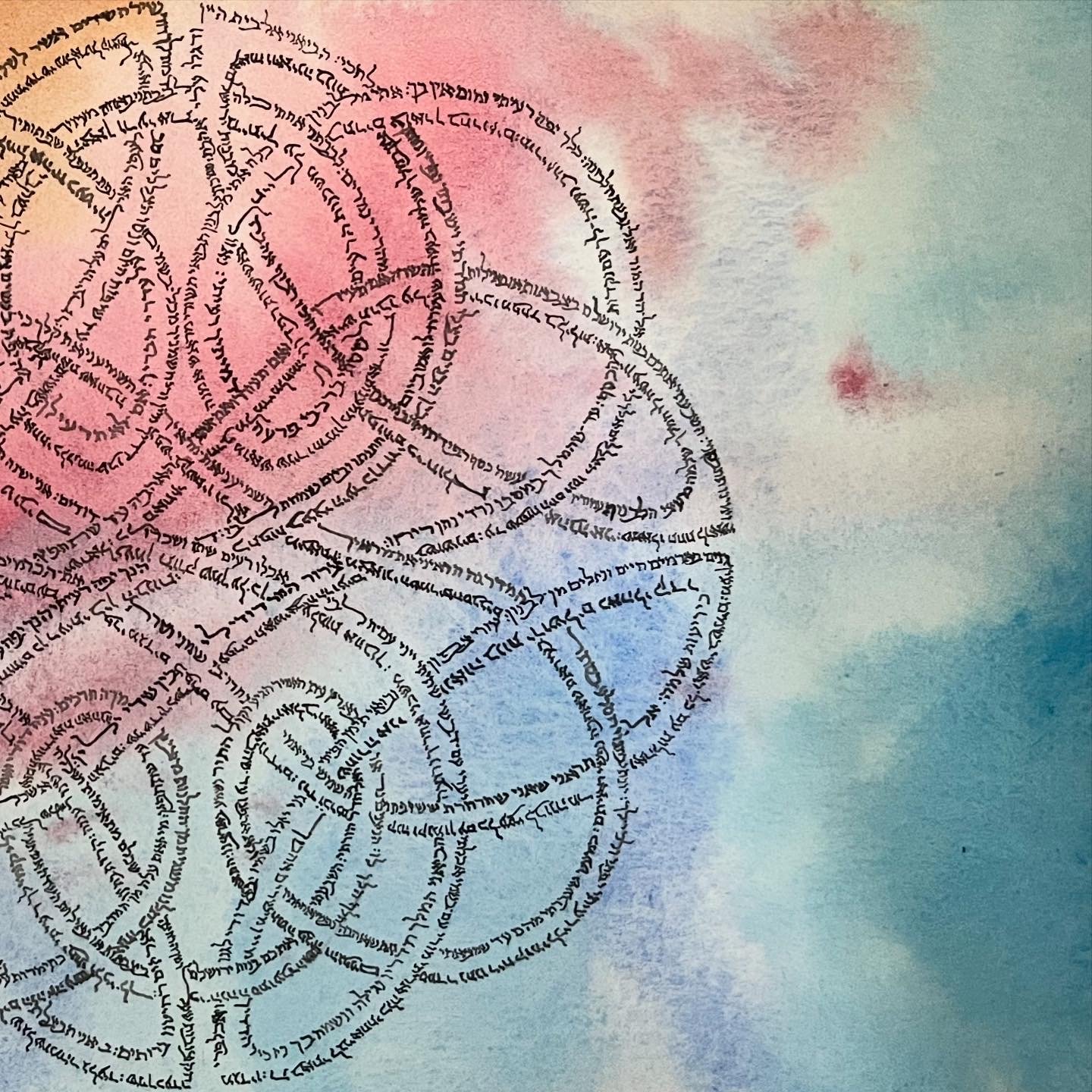
Micrography in the shape of a knot. Dip pen

Micrography in the shape of letters and Ashkenazi script. Text is the blessing over bread/food. Dip pens
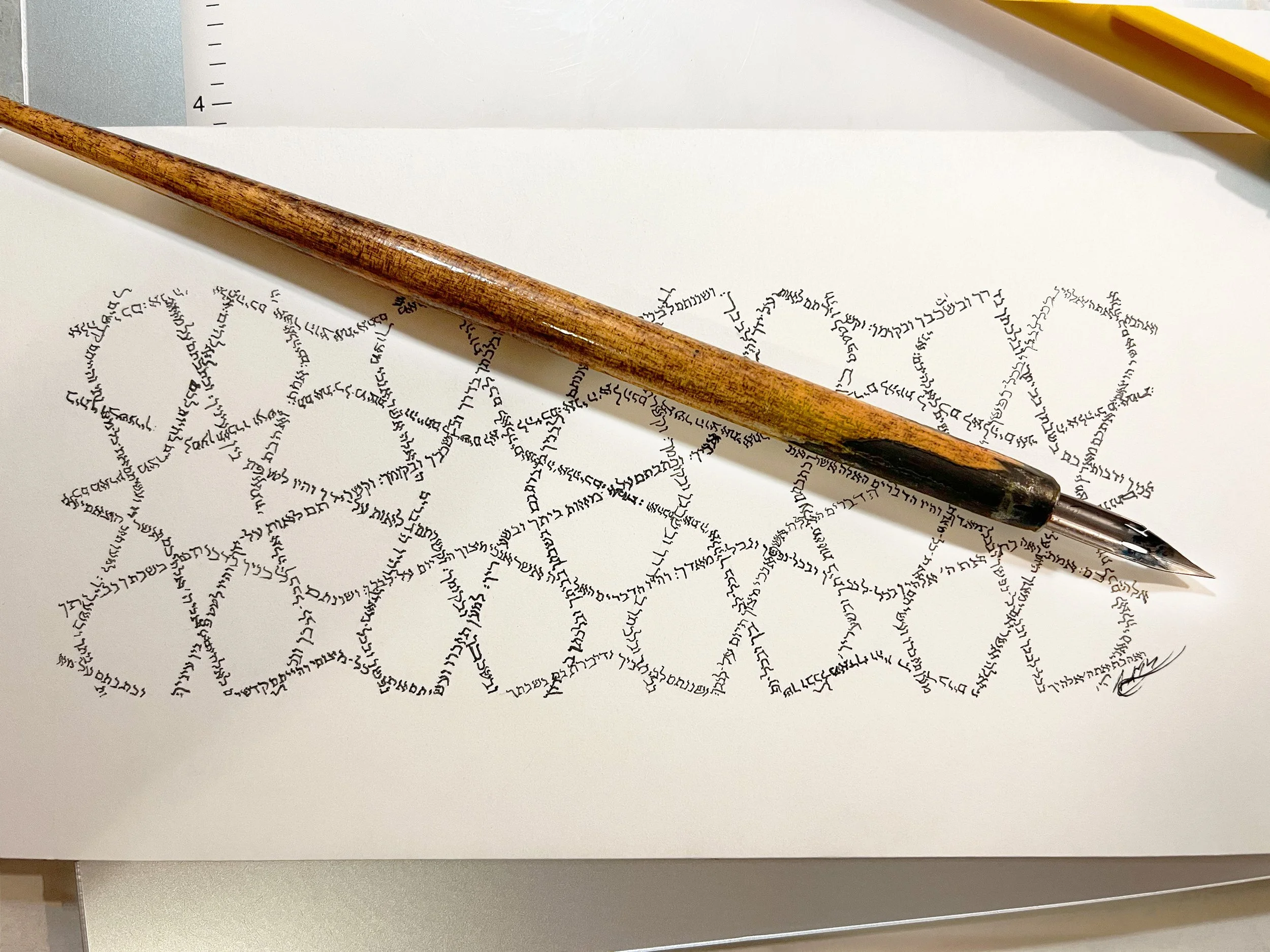
Micrography in arabesque geometric shape pattern.

Sephardic script. Text reads "I am my beloved's and my beloved is mine," a famous quote from the Song of Songs. Dip pen on watercolor

Sephardic script. Text reads "I am my beloved's and my beloved is mine," a famous quote from the Song of Songs. Dip pen
Other
all orthographies welcome!
Here are other scripts I’ve used that don’t fit into any of the above categories.
Devanāgarī script used to write Sanskrit and other Indic languages. Dip pen
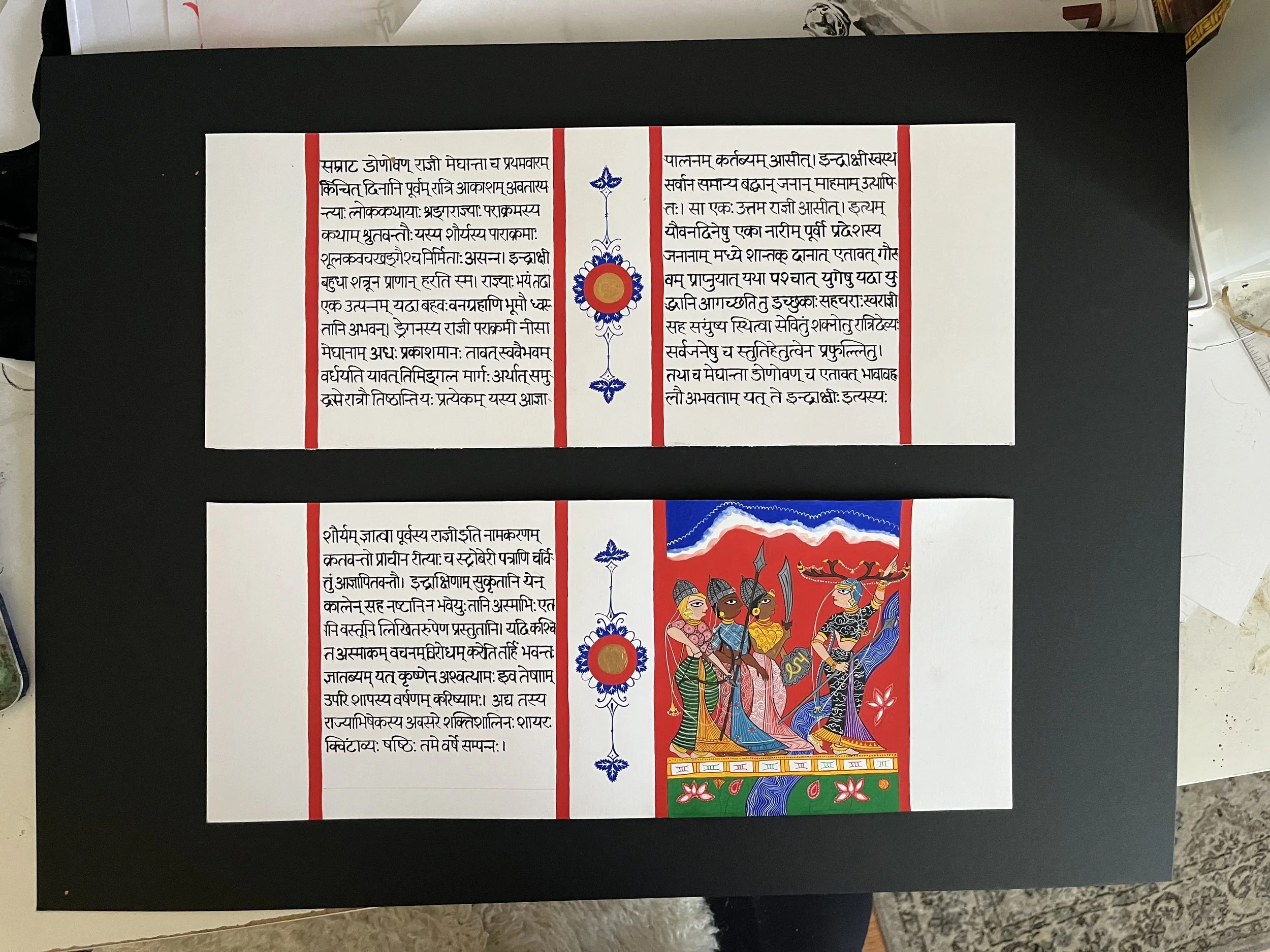
Devanāgarī script used to write Sanskrit and other Indic languages. Dip pen

Runes based on the "Elder Futhark" system used to write Old Norse and related languages. Glass dip pen
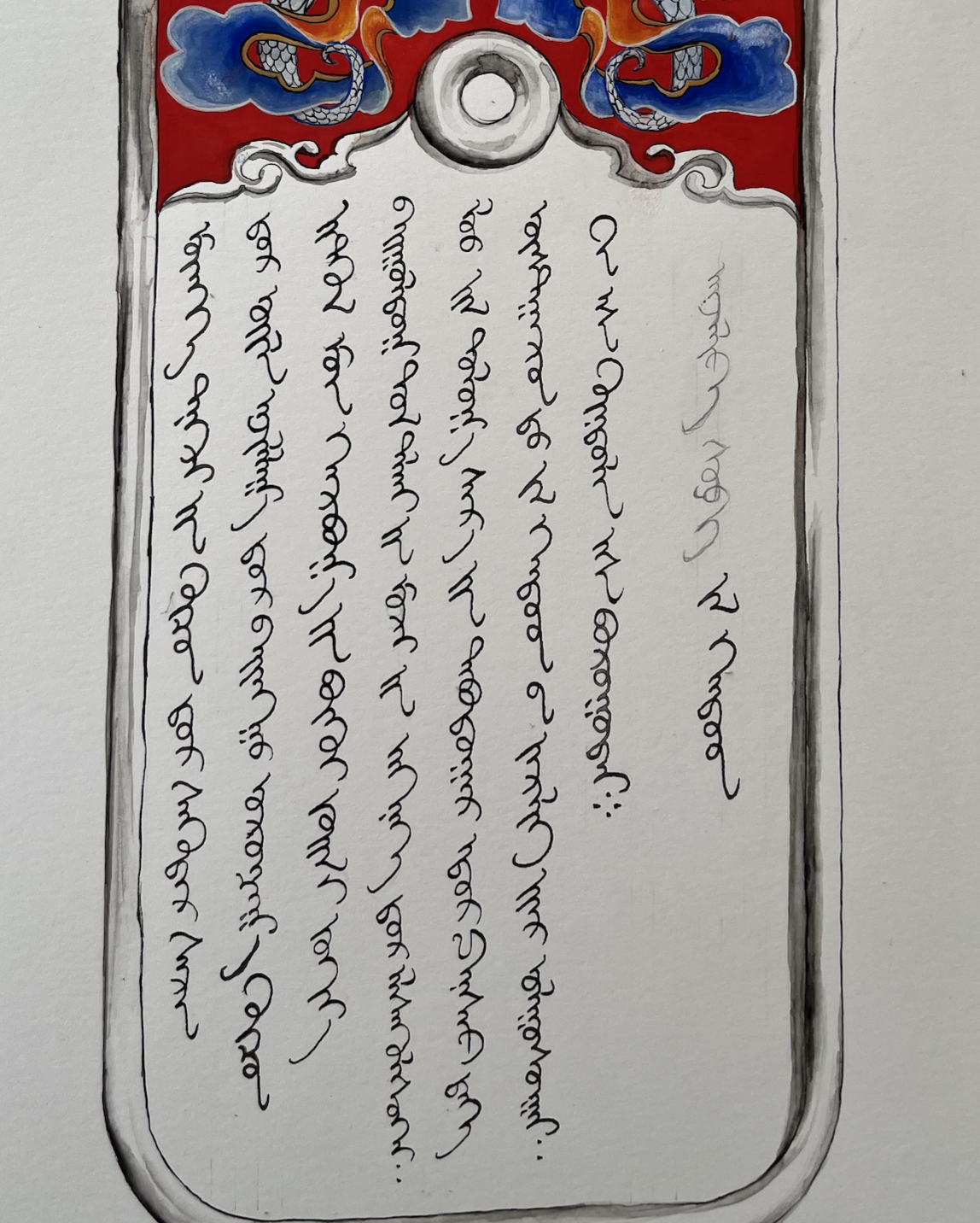
Written in the Mongolian "Uyghur script", developed in the 13th century based partly on the Arabic script but rotated 90 degrees and read vertically left to right. Dip pen (but traditionally done with a brush)